Last updated
How many porta potties do I need for my event or job site?
OSHA 1926.51(c)(1) requires 1 toilet facility for 20 workers or fewer, then 1 toilet seat and 1 urinal per 40 workers from 20 up to 200. At 200 or more workers, the ratio is 1 toilet and 1 urinal per 50 workers. For events in Eau Claire, count your peak attendance and round up. A wedding with 75 guests needs at least 2 units. A construction crew of 12 needs 1. Our how many porta potties do I need guide walks you through the math for your exact situation. If you're unsure, call, we've sized thousands of events.
What's the difference between a standard unit and a deluxe model?
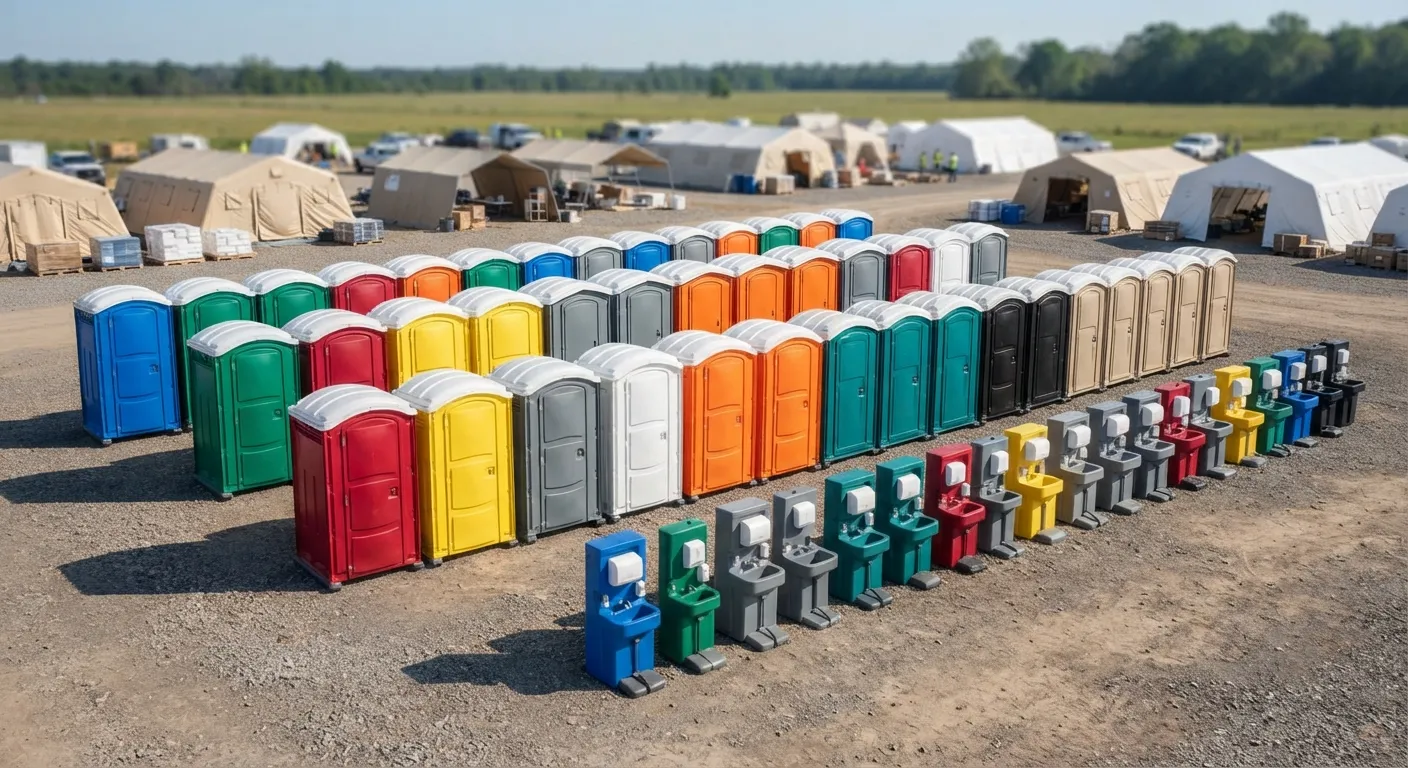
A standard porta potty is the workhorse. About 44 by 48 inches on the ground and 92 inches tall, it holds roughly 60 to 70 gallons. Foot pump flush, a small sink and single-ply paper. A deluxe flushable porta potty has a real flush, hand soap dispenser and interior lighting. Both hold the same volume, but deluxe feels more like a bathroom. For weddings and festivals in Eau Claire, deluxe makes sense. For construction, standard works fine. See our porta potty rental cost page for pricing on both.
Do I need an ADA accessible unit?
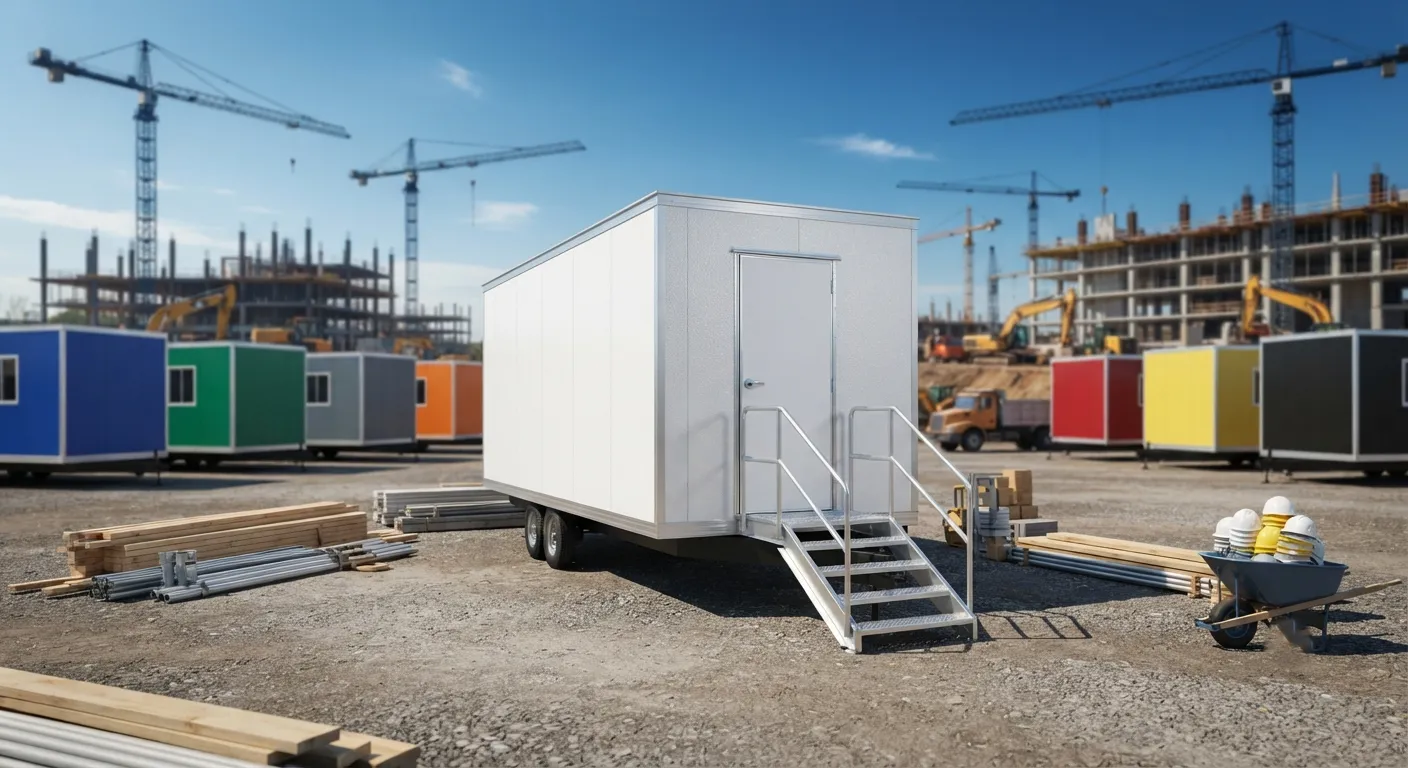
Yes, if you're hosting a public event or have disabled workers on site. An ADA accessible porta potty has a 36 inch clear route entrance per ADA Standards section 403.5.1, a 32 inch door opening per ADA Standards section 404.2.3, and interior grab bars. Where you cluster units, ADA Standards section 213.2 requires at least 5 percent of the total, and never fewer than one, to be accessible. For events in Eau Claire with more than 20 attendees, budget for one accessible unit minimum.
How often does my septic tank need pumping?
A residential septic tank typically pumps every 3 to 5 years, depending on tank size and household size. If you have a business, a restaurant grease trap, or higher water use, that interval shortens. A grease interceptor is pumped when fats, oils, grease and solids reach 25 percent of the liquid depth. Don't wait for warning signs. Regular septic pumping service in Eau Claire prevents backups and expensive repairs. Check your tank size and household count, then call for a service plan.
What can't go in a dumpster?
Hazardous waste, paint, chemicals, tires, batteries, appliances and propane tanks are forbidden. Many municipalities, including Eau Claire, restrict electronics. Construction debris is fine, wood, drywall, concrete. Yard waste sometimes needs a separate bin. If you're unsure, ask before you throw. Our what cannot go in a dumpster page lists the details. A roll-off dumpster rental works for home renovation, demolition and cleanout jobs, but confirm your load type first.
How do I know if I need a handwashing station?
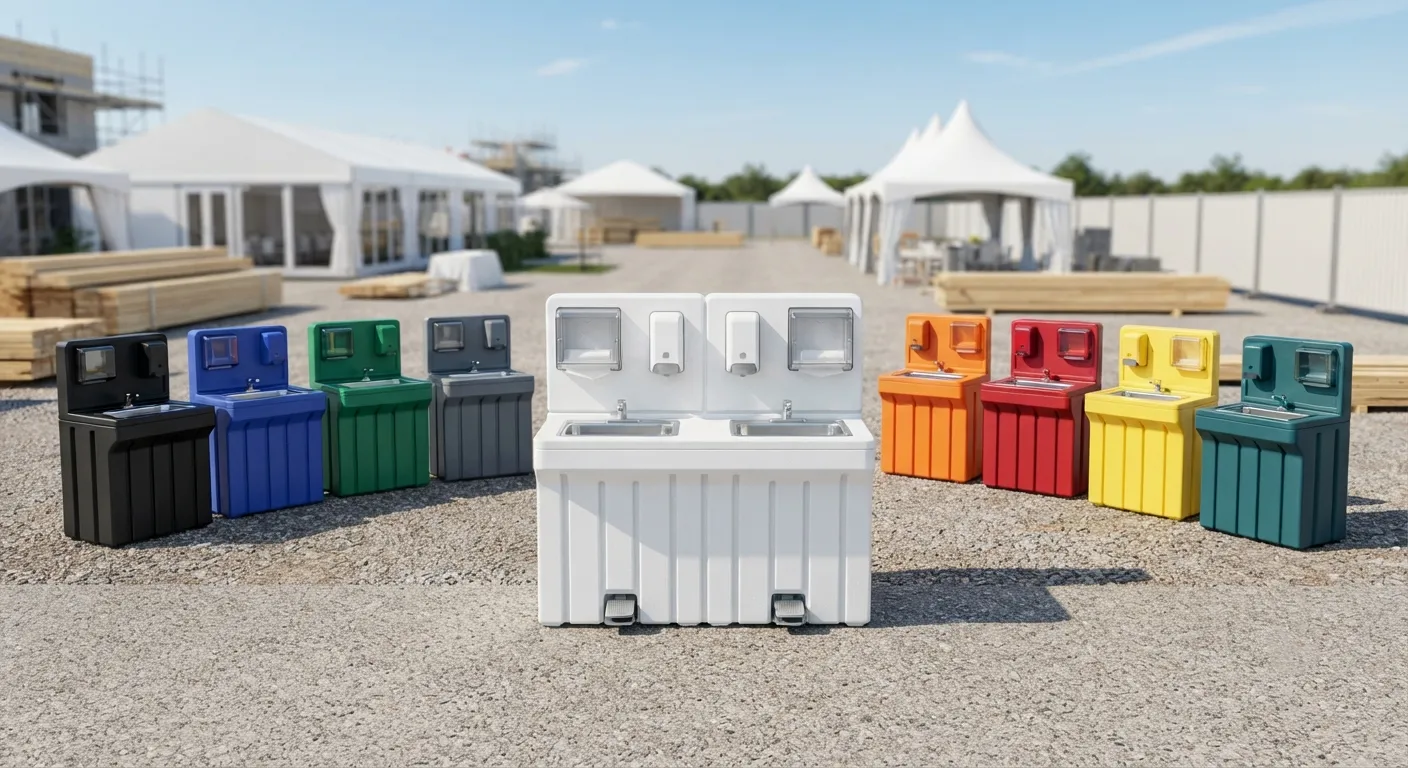
If employees apply paints, coatings, herbicides or insecticides, or work with other harmful contaminants, a handwashing station rental is required under OSHA 1926.51(f)(1). Per 29 CFR 1910.141(d)(2), washing facilities must have soap and towels or a hand drying device, hand sanitizer alone does not meet the standard. Construction sites in Eau Claire with finishing work need them. Agricultural operations need them. Office sites usually don't. We deliver portable sinks with hot water tanks.
What's the delivery fee and how fast can you deliver?
Delivery fees vary by distance, rental duration and item type. Local Eau Claire service typically runs $50 to $150, and may run higher for weekend or emergency calls. We serve Seymour (3.5 miles east), Altoona (5.1 miles southeast), Lake Hallie (8.1 miles northeast), Chippewa Falls (11.1 miles northeast) and Menomonie (24.3 miles west). Same-day delivery is often possible. Request a quote to confirm your date and location.
Next step
Get a delivery date
Tell us the address, the dates and the headcount. We size the order and confirm the route.