
Last updated
How many restrooms does a farm crew need?
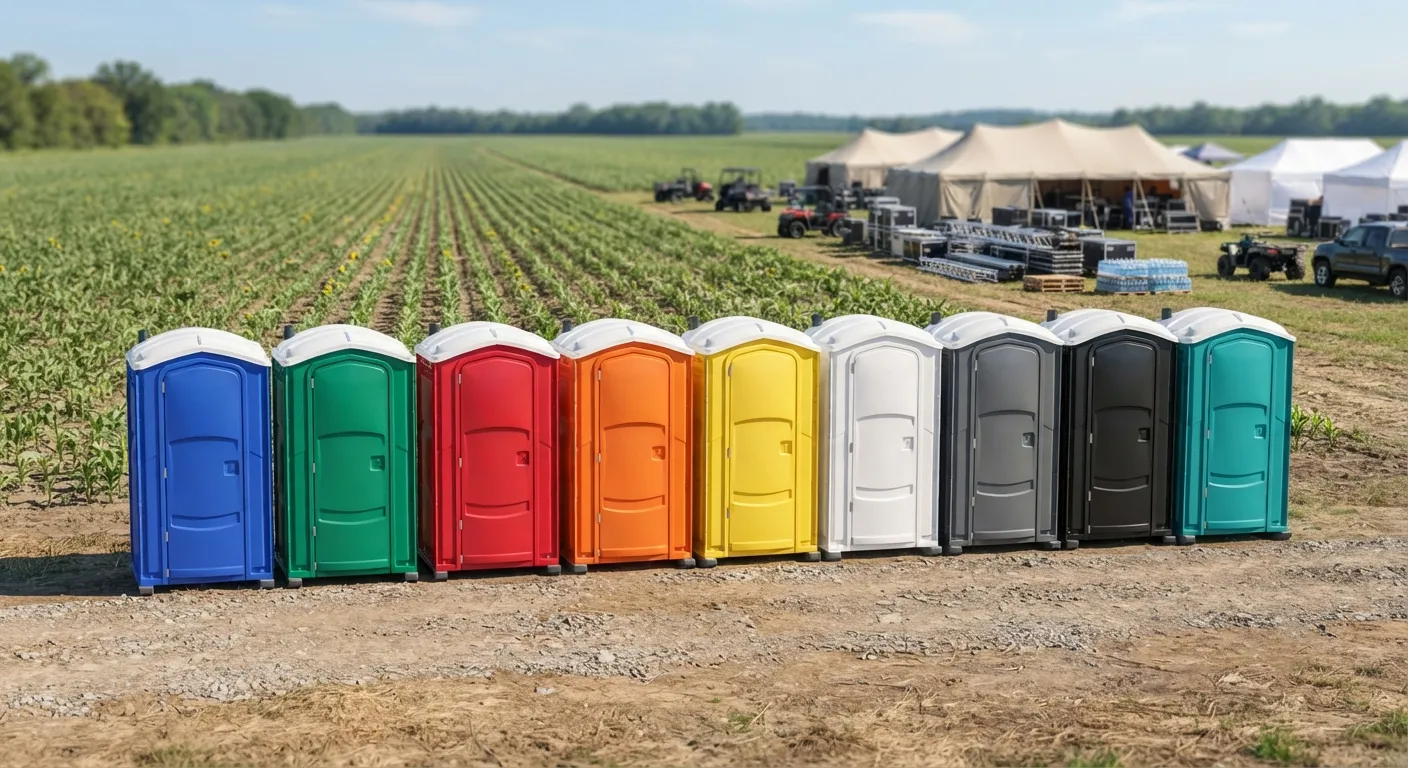
Start with the headcount, not the acreage. OSHA 1928.110 requires field sanitation for hand-labor employees at one toilet and handwashing setup per 20 workers, and it has to sit within a quarter mile of wherever people are actually working, not just parked at the barn. On a spread-out property near Eau Claire, that often means two or three units placed at different field entrances rather than one unit at the yard. If crews rotate between fields during the day, the units need to move with them, or you need enough spread across the property to keep everyone inside that quarter mile radius. Larger operations with packing sheds or sorting lines sometimes need more than the field minimum, since indoor workers fall under separate handwashing expectations. A portable toilet rental sized to the crew, not the field, keeps you inside the rule without paying for units nobody reaches. For seasonal help that scales up during harvest, a monthly porta potty rental is usually cheaper than booking weekly.
| unit | duration | typical price |
|---|---|---|
| standard | month | $200 |
| standard | week | $200 |
| standard | day | $150 |
Farms running crews through planting and harvest tend to land in the monthly column, since the equipment sits in one spot for weeks at a stretch. Ag work is also seasonal enough that a porta potty rental checklist at the start of the season saves a scramble later.
Do farms need handwashing stations too?
Yes. Field sanitation rule 1928.110 pairs toilets with potable water and handwashing at the same one-per-20 ratio, and general sanitation rule 1926.51(a)(1) backs that up by requiring an adequate supply of potable water at any place of employment. A handwashing station rental placed next to the toilet unit satisfies both in one stop, and a portable sink rental works well near packing tables where workers handle produce all day. Soap and towels matter here, not just water: 29 CFR 1910.141(d)(2) specifies that washing facilities need soap and towels or a hand-drying device, and hand sanitizer alone does not meet that standard. If your crew ever mixes or applies herbicides or insecticides, that triggers a separate rule, 1926.51(f)(1), which requires washing facilities specifically because of that contaminant exposure. That is a different obligation than the general field sanitation requirement, and it is worth planning for separately if spraying is part of the operation. A hand sanitizer station rental can supplement but never replace the soap-and-water setup. For a full rundown of what triggers which rule, see handwashing requirements.
Where should units go on a farm property?
Place units at field access points crews actually use, not at the road for convenience. Delivery trucks need roughly 60 feet of straight clearance to set a unit down, so gate width and turnaround room matter more on farms than on a tight urban lot. Uneven ground, mud season and long driveways all affect where a unit can safely sit, and Eau Claire's freeze-thaw cycle can turn a farm lane soft enough to strand a truck. If a field is far from any hard surface, plan the route before delivery day rather than after a truck gets stuck. Farms near Chippewa Falls, roughly 11.1 miles northeast of Eau Claire, and those closer in around Altoona, about 5.1 miles southeast, both deal with the same seasonal access issues once frost comes out of the ground. Winter operations add another layer: see porta potty in winter for how cold affects tank service and placement. For general siting logic that applies to any property, the porta potty placement guide covers ground clearance, wind exposure and service truck access in more depth. If your farm also runs an on-site septic system for a farmhouse or bunkhouse, that is separate from the crew's portable units, and a septic pumping service or a look at how often to pump a septic tank covers that side of the property. Farms hosting agritourism events, corn mazes, or pumpkin patches have different crowd numbers than a labor crew, and that calls for event restroom rental or festival restroom rental planning instead of the field sanitation math above. A porta john rental works fine for either use case once the headcount is set.
How often do farm porta potties get serviced?
Weekly is the standard baseline for up to 10 users over a 40-hour week, per ANSI/PSAI Z4.3. Larger crews or hot months usually need more frequent pumping. Ask about service intervals when you book, since Eau Claire summers can push tank capacity faster than the standard schedule assumes.
Can I rent just one unit for a small family farm?
Yes. A single standard porta potty rental covers a crew of five or six for a season, well under the 20-worker threshold in 1928.110. Add a handwashing station alongside it to stay compliant on both fronts.
What size crew needs more than one restroom?
Once you pass 20 field workers, 1928.110 calls for a second facility, and it has to be within a quarter mile of the work area. Spread-out fields often need extra units for reach, not just headcount.
Do seasonal workers count differently than year-round staff?
No. The quarter-mile and one-per-20 rules in 1928.110 apply to anyone doing hand labor in the field, seasonal or permanent. Harvest crews trigger the same obligations as your regular staff.
Is hand sanitizer enough instead of a handwashing station?
No. 29 CFR 1910.141(d)(2) requires soap and towels or a hand-drying device at washing facilities. Sanitizer alone does not satisfy that standard, so pair any toilet unit with real handwashing.

Next step
Get a delivery date
Tell us the address, the dates and the headcount. We size the order and confirm the route.